One Scholar’s Path Strengthening Orthopedic Care in Senegal Through Skills Development
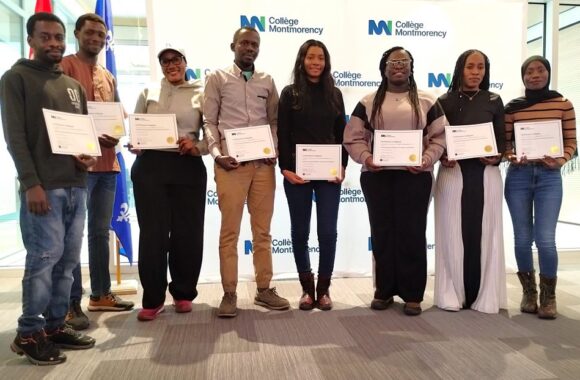
A partnership between the Institut supérieur d’études paramédicales de Mbour (ISEM) and Collège Montmorency in Canada aims to address the shortage of qualified orthotists and prosthetists in Senegal. As part of the advanced training scholarship in orthotics and orthopedic care — a project funded by Global Affairs Canada through the BCDI 2030 program — eight ISEM graduates spent four months in Canada to complete training leading to a college certification in orthotics, prosthetics, and orthopedic care.
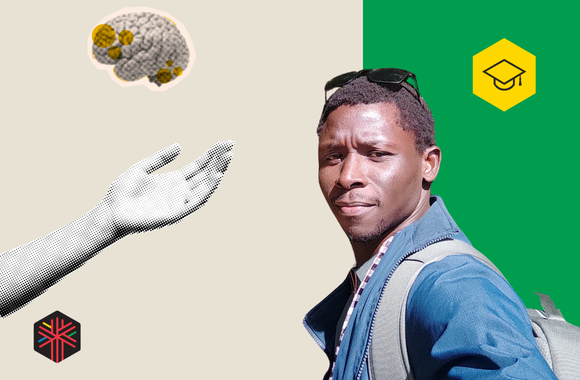
We had the privilege of speaking with one of these Scholars, Mr. Sydney Constantino Suwa Manga, who completed his training in Canada in December 2025.
“Early in my career, I earned two degrees: one in business administration and the other in medical administration. I then shifted my focus to the field of orthopedics.
I’ve always been a hands-on person; I enjoy tinkering, understanding how things work, and technical trades have always interested me, particularly mechanics. I immediately found the mechanical aspect of orthotics and prosthetics appealing.
In Senegal, meeting the needs of people with disabilities is an urgent priority and the sector is beginning to evolve rapidly. Contributing to this progress and helping address these needs are major drivers in my career and reinforce my commitment to its development.
Before starting my certificate program at Collège Montmorency, I was working at a hearing aid manufacturing centre in Senegal. I quickly realized that new technologies and hearing aids are evolving very rapidly.
As soon as I arrived in Canada, I realized just how much our production methods in Senegal needed innovation. Everything was new to me: layering, tools, equipment, workshop organization. The use of computers, for example, is almost non-existent back home. During this training I was able to refine my knowledge and learn lamination, a skill that will serve as a lasting asset in my career.
The speed at which the sector is evolving has helped me understand that orthotics and prosthetics are essential to the development of African countries. Healthcare, and more specifically orthopedics, is undeniably a pillar of our societies. During my apprenticeship in Canada, for example, we were taught a method that we don’t even use yet in Senegal, and it is already being replaced by 3D printing.
It struck me: something can become outdated even before certain parts of the world have had a chance to adopt it. I truly hope that in Senegal and elsewhere, we can reap lasting benefits by collaborating and learning together from these innovations. My experience is a concrete example of how knowledge transfer is essential to the sector’s progress, and education serves as a vital bridge.
One of the most surprising aspects of my experience was the support provided by the professors. Throughout my experience, the Canadian academic environment allowed me not only to acquire skills useful to my profession but also to understand that this sector is undergoing a major transformation and requires constant adaptation.
This is the bridge I would like to build; the Canadian entrepreneurial spirit has strengthened my determination to address the needs of people with disabilities in Senegal! I hope to apply the skills I have acquired — including fitting orthotics — and adapt them to the local and even continental context.
I’ve already started refining a few ideas, identifying the tools I’ll need, and thinking about concrete projects. I’ve noticed, for example, that orthotic insoles work very well in Canada. In Senegal, they’re unfortunately almost unknown despite the clear need for them. So I asked myself: why not give it a try when I return?
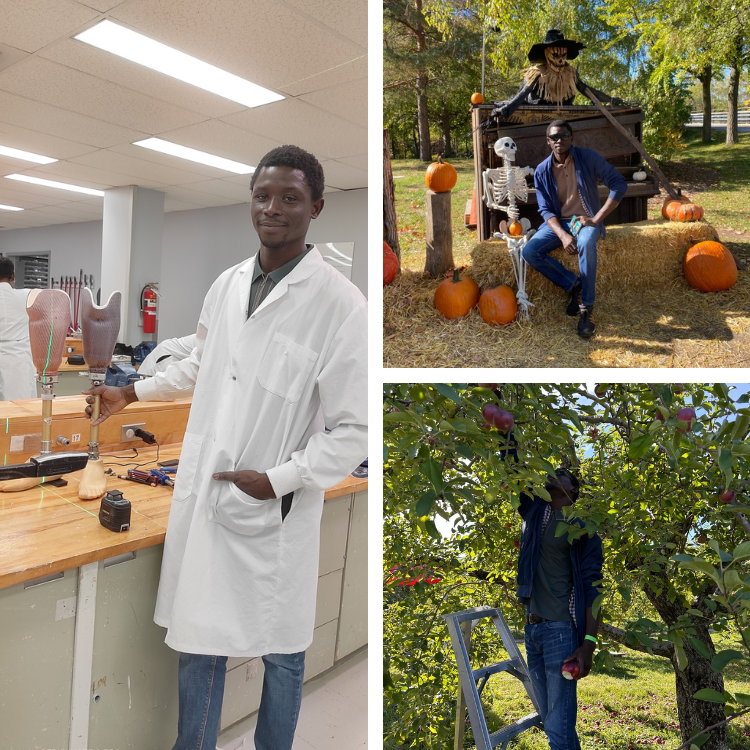
The skill I acquired during my time in Canada that most useful to me today is that I’ve become more observant, I’m able to detect even subtle physical imperfections in my patients through observation. Also, I’ve become more precise in my corrections on plaster models, which means that people trust me much more than before.
If I could offer one piece of advice to future scholarship recipients starting their training, it would be to gain practical international experience through initiatives like the BCDI 2030. With the rapid evolution of the field, these experiences are essential to addressing the diverse needs that exist at many levels.
Since my return to Senegal I’ve resumed the internship I had put on hold to go to Canada. I’m working in a private centre in the Zinguinchor region, in the south. I am also working with the other BCDI 2030 Scholars from the Collège Montmorency to establish an orthopedic cooperative, SenVisionOrtho.
I have been putting everything I’ve learned in Canada to good use by addressing the local needs of my country, while hoping to strengthen this bridge between Canada and Africa.
Over the next five years, my main goal is to try to become even more independent, acquire a lot of skills and, who knows, maybe one day become my own boss. I want to be more independent and no longer be at the mercy of the ups and downs of the hearing aid sector in Senegal.
I am deeply grateful to those who helped me settle in, especially BCDI 2030 for this opportunity, the faculty at Collège Montmorency and the entire cohort with whom I share the same ambition.”
The empowerment of young Africans, as well as the strengthening of cooperation between Canada and the African continent in the field of global health, is of strategic importance in the current international context. Aware of this challenge, BCDI 2030 reaffirms its commitment to making a concrete and sustainable contribution to these efforts, particularly through skills transfer and the exchange of knowledge.
Through its projects, BCDI 2030 provides people with access to inclusive, high-quality education to improve their employability in their home countries.