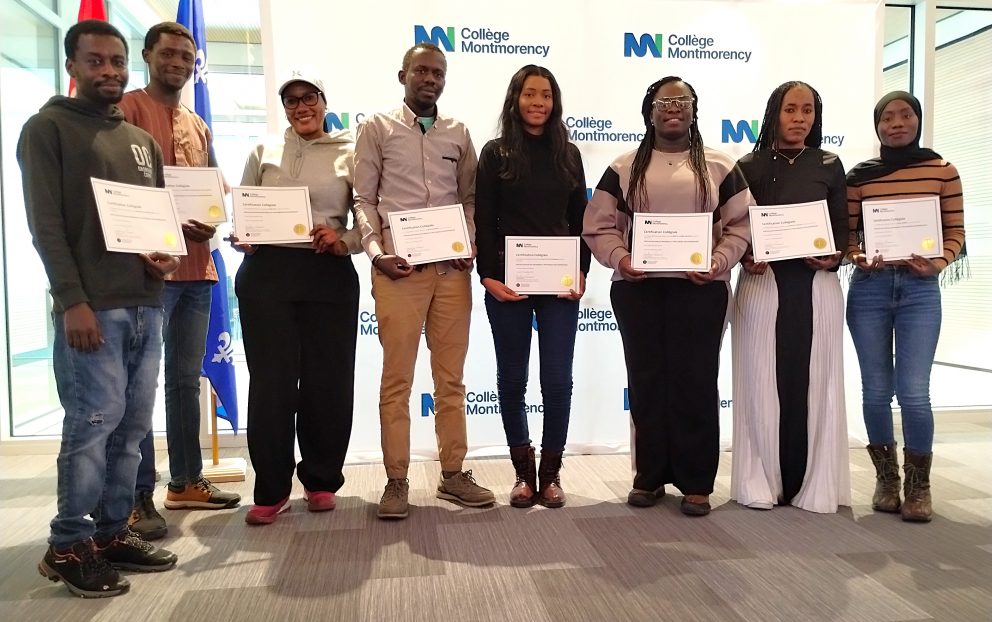
Through its BCDI 2030 scholarship project, the Collège Montmorency is addressing the shortage of qualified orthotists and prosthetists in Senegal — and creating budding entrepreneurs
When a group of Senegalese orthotists and prosthetists arrived at Collège Montmorency in the fall of 2025 for four-months of specialized training, they expected to gain new knowledge, build confidence, deepen their technical expertise.
What they did not expect was to return home with far more: a sense of community, an entrepreneurial spirit and a new vision for their future.
The cohort consisted of eight recent graduates of the Institut supérieur d’études paramédicales de Mbour (ISEM), the first and only school in Senegal to offer specialized training for technicians to design, manufacture and adapt orthoses and prostheses.
Funded by Global Affairs Canada through the Canadian International Development Scholarships 2030 (BCDI 2030) program, the partnership between ISEM and Collège Montmorency was designed to strengthen local capacity in Senegal. Over 350 hours of training, the Scholars earned a college certification in orthotics, prosthetics and orthopedic care.
The initiative built on Montmorency’s more than 30 years of experience working with developing countries through student exchanges, training initiatives and knowledge transfer projects.
But BCDI 2030 has a unique focus: an emphasis on building Scholar’s employability in their home countries.
In conversations with ISEM, the Montmorency team learned that job opportunities in prosthetics and orthotics in Senegal are limited, particularly within the public sector.
“That reality pushed us to think differently,” says Simon Morin, Educational Advisor for International Projects at Collège Montmorency and the project’s lead.
Alongside technical training, the program therefore included modules on entrepreneurship and the development of a “back-home plan” in the form of a business proposal. Rather than competing for a small number of government jobs, the Scholars were encouraged to imagine how they could create opportunities for themselves and their communities.
The idea required some persuasion.
“It wasn’t only about lighting the flame for entrepreneurship … it was about changing their mindset,” explains Anissa Kherrati, a consultant and trainer for entrepreneurship and women’s leadership. “When people hear the word ‘entrepreneur,’ they often think about capitalism or making money.”
But these are people motivated by a desire to help others, she explained.
Part of the college’s role was showing them that entrepreneurship can be rooted in service. By working together, they could build something collective that would improve access to care throughout the country — with the added benefit of greater autonomy and flexibility than they might find in the public sector.
As the project progressed, it became clear that the Scholars would benefit from continued support once in Senegal — not only to refine their ideas, but to gain the confidence needed to turn them into reality.
The college adapted the project to include six additional months of mentorship and accompaniment.
The additional mentorship was optional, but the Scholars embraced it wholeheartedly.
“The Canadian entrepreneurial spirit has strengthened my determination to address the needs of people with disabilities in Senegal,” confirms one of the Scholars, Sydney Constantino Suwa Manga.
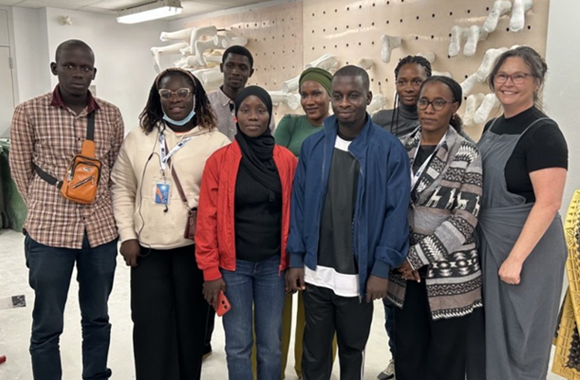
Not long after returning home, the group reached out to Kherrati for support in formally launching a cooperative. She now meets with them weekly over Teams or WhatsApp, helping them navigate everything from regulations and administrative processes to brainstorming solutions to everyday challenges.
Officially, the support concluded in June 2026. Unofficially though? She’ll be keeping in touch.
“It’s my baby,” she says with a laugh.
The cooperative they created — SenOrthoVision — reflects the spirit of the BCDI 2030 project. “Sen” refers to Senegal and also means “together” in Wolof, the country’s lingua franca.
SenOrthoVision has three planned streams: clinical services, training and awareness-building. The group is also developing a mobile clinic model to bring specialized technical expertise to remote communities.
The impact of the project has already extended far beyond the eight Scholars.
Welcoming the group to campus mobilized faculty, staff and students across the department. Emerging professors gained valuable teaching experience, while Canadian students were exposed to new global perspectives on their profession.
“In some cases, it reinforced our students’ passion for their studies and their profession,” noted one faculty member.
The initiative also aligned closely with Collège Montmorency’s strategic vision of being un acteur de changement et de progrès social by participating in collective projects that contribute to sustainable development.
More broadly, it has inspired the college to rethink aspects of its international programming. Beyond technical training, it demonstrated the importance of equipping Scholars with the tools, confidence and support systems needed to build lasting change once they return home.
For the eight Scholars behind SenOrthoVision, the journey did not end when they boarded a plane back to Senegal.
In many ways, it was only the beginning.