From Dakar to Montreal, a commitment to research, prevention and strengthening health systems in West Africa
By Fanny Constantino, Communications Specialist.
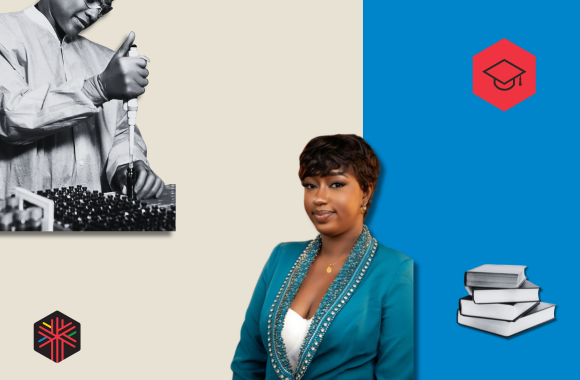
To mark International Women’s Day, we had the privilege of speaking with Ms. Khardiatou Barro, a doctoral student in public health at the Université de Montréal and a BCDI 2030 Scholar. The “One Health” Afro-Canadian Training Scholarship Project is part of the Canadian International Development Scholarships 2030 (BCDI 2030) program. It aims to train experts in Benin, Burkina Faso and Senegal, such as Ms. Barro. She has been studying in Canada since August 2025.
Below is her testimonial:
“My career lies at the intersection of medicine, epidemiology and public health, with a strong focus on health issues in West Africa, particularly in Senegal. I was trained as a physician, and even before completing my doctorate in medicine, I was interested in public health.”
In the field, I realized that many of the diseases we treated in the hospital were in fact linked to factors that could be avoided, such as living conditions, lack of prevention and the limitations of the healthcare system. This observation led me to pursue epidemiology, with the desire to better understand the determinants of health and produce data that would be useful for decision-making.
Throughout my career I have worked on several topics, including non-communicable diseases and I have also contributed to public health activities within the Ministry of Health and Social Action in Senegal. Before completing my medical studies, I also gained experience in infectious diseases, which reinforced my interest in integrated approaches. This observation led me to focus on epidemiology, with a desire to better understand the determinants of health and to produce data useful for decision-making.
My project therefore aims to evaluate the effectiveness of interventions on the knowledge, attitudes and practices of Senegalese populations in relation to these diseases, in order to produce scientific data that can inform public decisions and strengthen prevention actions at the interface between human health, animal health and environmental health. My medium- and long-term ambition is to contribute to strengthening health systems in Africa by combining research, training and knowledge transfer, and by supporting the development of evidence-based public policies.
In Senegal, I was involved in collective initiatives at both the institutional and community levels, and I also helped coordinate national research projects, such as the Survey on Non-communicable Risk Factors. I played a key role in this project, acting as the main point of contact. I was responsible for the survey’s scientific coordination and I learned a lot from the experience. The project’s objective was to provide up-to-date national data. Through this experience, I realized that I can lead a major scientific project from the very beginning of my career, while complying with international standards.
Here in Canada, I am building upon this learning process and hope to acquire knowledge and tools that I can use to serve my country and, more broadly, my continent. I believe it is essential to contribute to strengthening health systems by combining research with training and the transfer of knowledge acquired in Canada.
I also want to get involved in public policy development and women’s empowerment. Many women, especially those in remote areas, lack real autonomy. However, financial autonomy and, more generally, autonomy in decision-making are major levers that enable them to engage in income-generating activities and leave a lasting mark.
If I had to send a message to future Scholars, I would say, “seize this opportunity!” This experience promotes exchange, sharing of expertise and transfer of skills; all which are essential for addressing local and regional needs that are sometimes otherwise difficult to meet. At the Université de Montréal (UdeM), not only am I receiving a quality education, but I am also being mentored by excellent professors who are very accessible and always willing to listen, namely Prof. Thomas Druetz and Prof. Muriel Mac-Seing.
I would like to conclude by thanking those who have facilitated my integration, in particular, UdeM International, the UdeM’s 2025 cohort of public health doctoral students, the members of my two labs, SAPRIME and Solidarités Global Health and the Senegalese community at UdeM.